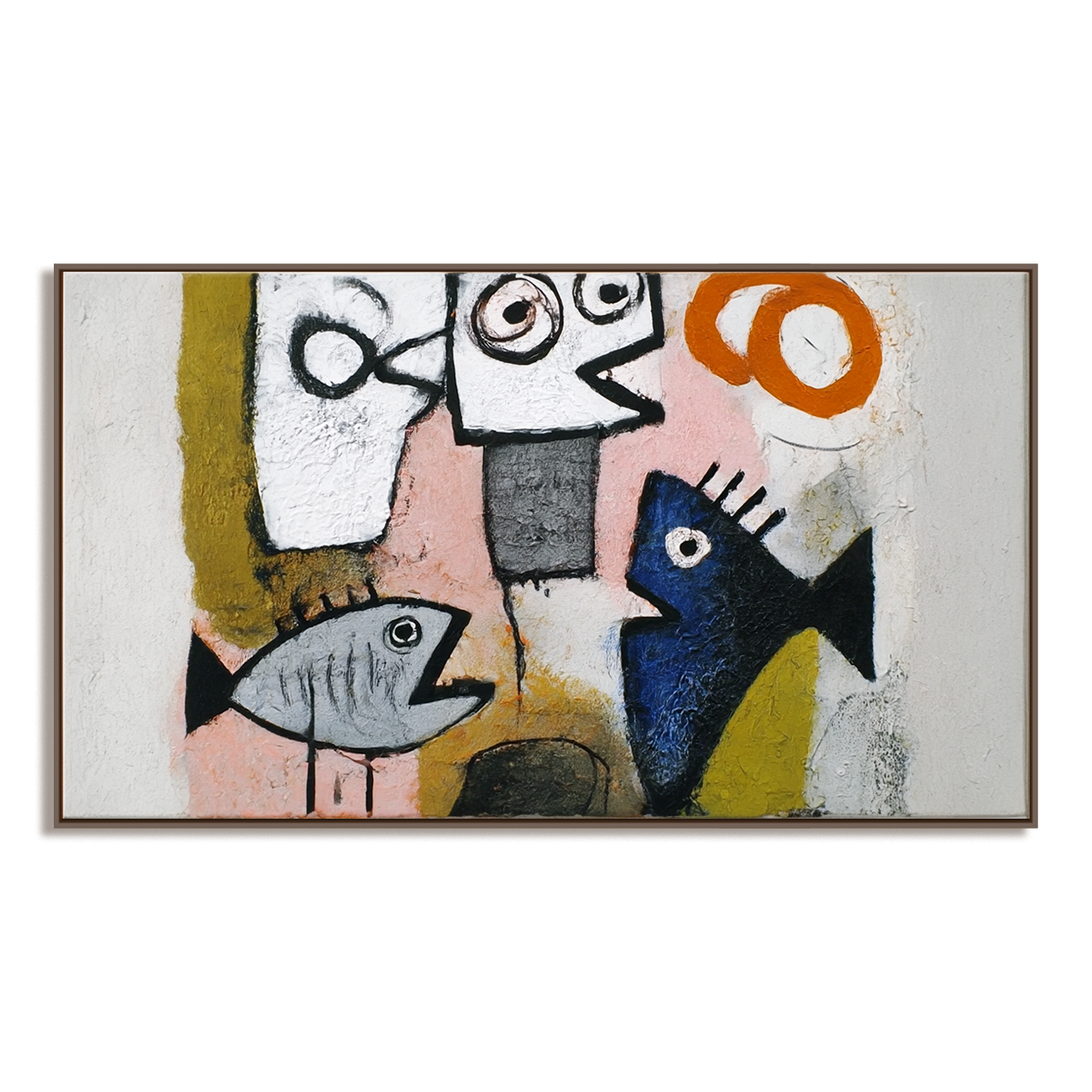
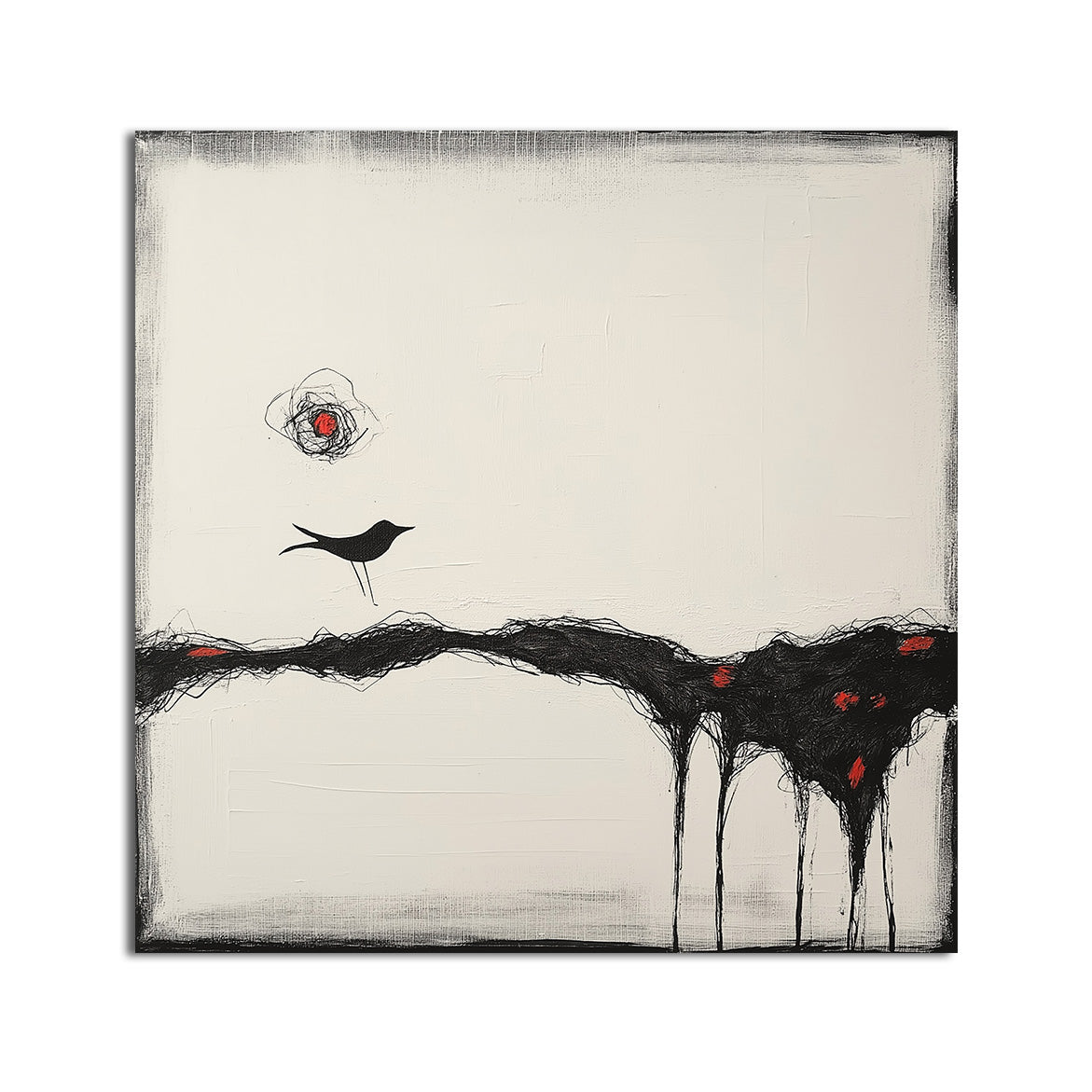
Black and white landscape art is best for rooms that need atmosphere, contrast, and calm without adding more color. It suits living rooms, offices, bedrooms, hallways, and hospitality spaces. The limitation is balance: monochrome art can feel elegant or stark depending on scale, texture, lighting, and the warmth of nearby materials.
A black and white landscape does not have to be literal. It may suggest mountains, waves, fields, fog, or horizon lines through texture and tonal movement. That makes it especially useful for interiors where color would interrupt the palette.
Why monochrome landscapes feel calm and dramatic
Removing color makes the eye focus on value, shape, rhythm, and surface. Dark areas create weight; pale areas create air. A horizontal landscape can stretch the room visually, while a vertical landscape can make a narrow wall feel taller and more architectural.
This is why black and white landscape art often works in minimalist interiors. It adds visual depth without demanding a new color scheme.
Choosing the right format
A wide horizontal landscape is usually strongest above a sofa, bed, dining bench, or console. It echoes the furniture line and can make the wall feel settled. A square black and white landscape feels more gallery-like. A vertical piece is better for narrow walls, stair landings, or spaces between windows.
For IrisLee Gallery's black-and-white and textured landscape-related works, the most useful buying question is whether the artwork should calm the room, sharpen it, or create a dramatic focal point.
Texture changes monochrome art
Texture is especially important in black and white art because the palette is reduced. Raised paint, visible brushwork, or layered surface can prevent the artwork from feeling flat. Under angled light, texture can make a monochrome landscape feel almost sculptural.
However, glossy or heavily textured surfaces need careful placement. Direct glare can interrupt dark areas and make the landscape harder to read.
How to pair black and white landscape art with furniture
- With warm wood, black and white art feels grounded rather than cold.
- With white upholstery, add texture nearby so the room does not feel bare.
- With black metal, repeat black sparingly so the artwork keeps its importance.
- With stone or concrete, choose a landscape with enough softness to avoid severity.
Mistakes to avoid
The most common mistake is choosing a piece that is too small. A black and white landscape needs enough scale to establish mood; otherwise it can look like a temporary filler on a large wall. Another mistake is assuming monochrome means neutral. Strong black contrast can dominate a room as much as bright color.
Also avoid placing a high-contrast landscape in a room that already has many black-and-white patterns. The artwork may lose its quiet power.
When black and white landscape is the right choice
Choose black and white landscape art when the room already has a strong palette, when the view outside is important, or when the interior needs depth without additional color. It is especially useful for modern apartments, offices, and bedrooms where calm contrast matters.
Frequently Asked Questions
Is black and white landscape art good for a living room?
Yes, black and white landscape art can be excellent for a living room when the size relates to the sofa or main furniture wall.
Does monochrome wall art make a room feel cold?
It can if the room has no warmth elsewhere. Pair black and white art with wood, linen, wool, warm lighting, or textured surfaces to keep the room comfortable.
Should black and white landscape art be framed?
Framing depends on the room and canvas style. A slim black or natural wood frame can sharpen the presentation, while a gallery-wrap canvas can feel cleaner and more contemporary.